
The Moment You Notice It
You hit the opener button and the door groans, jerks, or stalls halfway up. Or you try lifting it manually and it feels like it's glued to the slab, barely budging before the motor strains and clicks off. Your first thought might be that it's "frozen" — but this is Coral Gables, not Minnesota. Garage doors here don't ice over. What you're feeling is a close cousin of that problem, caused by South Florida's own climate quirks: humidity, salt air, and heavy rain.
A sluggish door is still a door with a real mechanical cause, and it's worth running through the checks a technician would use before you force it open and strip a gear or snap a cable.
Symptom: The Door Won't Budge at All
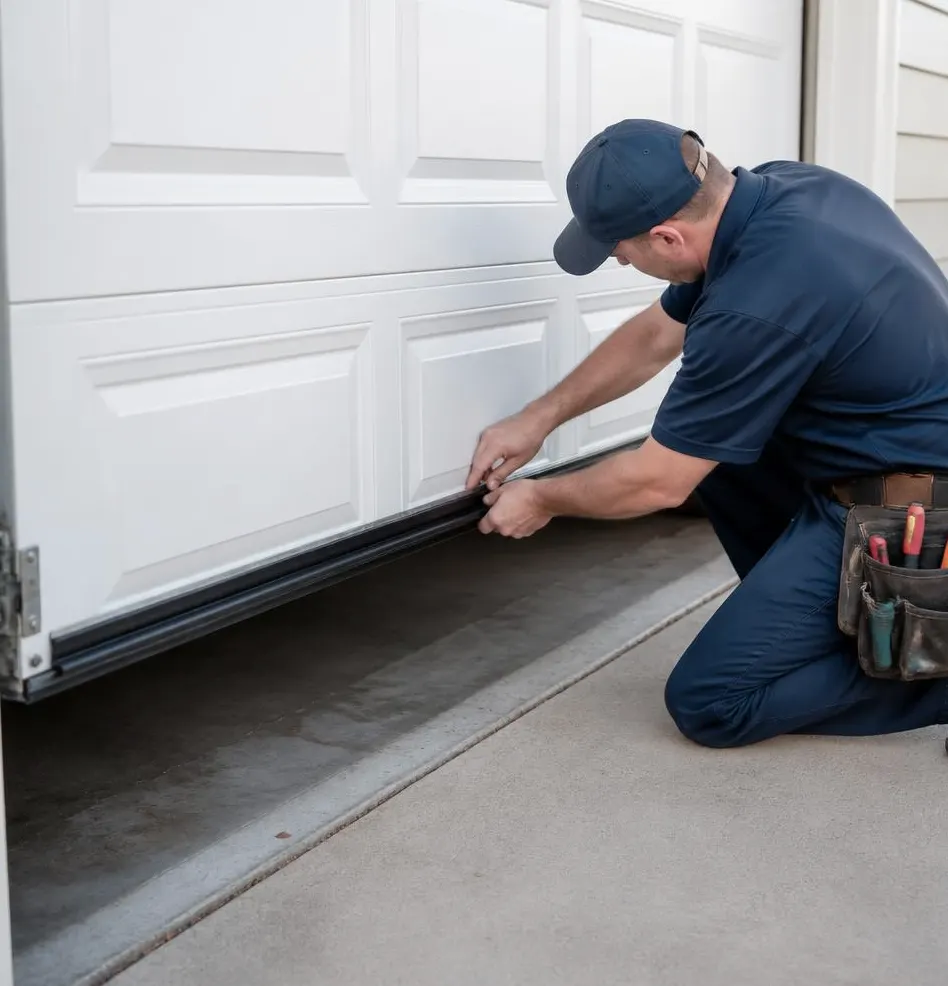
If the door is completely stuck — not slow, just immovable — the first suspect is the bottom seal or weatherstripping fused to the slab after a heavy downpour. Afternoon storms leave standing water along the bottom of the track, and if the door sat closed overnight, the rubber gasket can suction itself to a damp or slightly uneven floor. This isn't ice; it's moisture adhesion, and it's common after the kind of sudden, heavy rain this area gets during storm season.
What the fix involves
A technician will gently break the seal with a pry bar at the corners rather than running the opener against resistance, then check whether the gasket has hardened, cracked, or lost its flexibility — rubber seals age faster here thanks to UV and humidity cycling. A worn seal usually just gets replaced; it's a low-cost fix and it prevents the same sticking from recurring during the next storm.
Symptom: The Door Moves, But Slowly and Unevenly
If the door does move but drags, binds, or rises unevenly on one side, the next check is the tracks. Humidity causes wood-framed garage openings and door panels to swell slightly, which narrows the clearance between the rollers and the track. Salt air near the coast accelerates rust on the track itself, especially where paint has chipped or where the galvanized coating has worn thin.
What the fix involves
The technician inspects the full length of both tracks for rust pitting, bends, or debris buildup — leaves and grit from storm runoff collect in the track channel and act like sandpaper on the rollers. Light rust gets cleaned and the track re-lubricated; heavier corrosion usually means a section of track needs replacing rather than just cleaning, since a pitted track will keep chewing through rollers.
Symptom: The Door Is Heavy to Lift and the Opener Strains
If the door feels like dead weight — the opener is working hard, clicking, or reversing on its own — the springs are the next stop. Torsion and extension springs lose tension gradually, but humidity and salt exposure speed up corrosion on the coils, which makes them wear unevenly and lose lift capacity faster than they would in a drier climate.
What the fix involves
Spring tension gets tested against the door's weight. If the spring is rusted, stretched, or simply undersized for the door after years of humidity exposure, garage door spring repair means replacing it with a correctly rated spring — not just re-tensioning the old one. This is not a DIY adjustment; torsion springs are under enough stored force to cause serious injury if handled without the right bars and training.
Symptom: Rollers Grind or Squeal Before the Door Sticks
Sometimes the sluggishness builds gradually — a squeal a few weeks ago, now a grind, now a full stall. This points to rollers and cables rather than springs or tracks. Moisture gets into roller bearings and either washes out the lubricant or introduces rust inside the bearing itself, so the roller stops spinning freely and starts dragging along the track instead.
What the fix involves
A technician checks each roller by hand for play, pitting, and resistance, and inspects the lift cables for fraying near the drum, a common failure point when corrosion weakens the strands. Cable and roller replacement is usually done as a set rather than one at a time, since if one roller has reached the end of its life from moisture exposure, the others on the same track are close behind.
When to Call Precision Garage Door of Coral Gables
If your door is sticking, grinding, or straining and a quick seal check or spray of lubricant doesn't solve it, it's time to call in a technician rather than keep forcing the opener. Our team runs through tracks, springs, rollers, and cables in that order, diagnoses which component humidity or salt air has actually damaged, and handles garage door spring repair or cable and roller replacement on the spot in most cases. We also offer garage door maintenance and tune-ups that catch this kind of corrosion before it turns into a stuck door at the worst possible moment.
If your garage door in Coral Gables, FL is sticking, dragging, or straining, call Precision Garage Door of Coral Gables today and we'll get it moving smoothly again.