
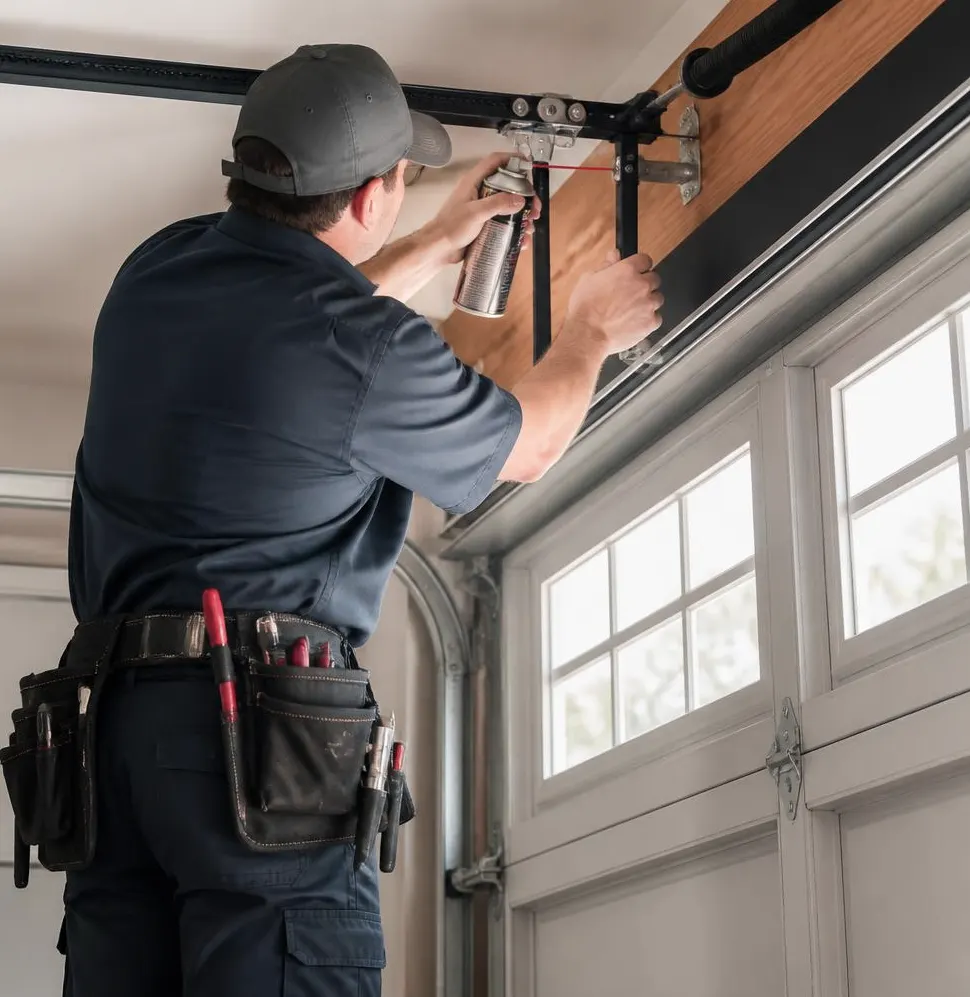
What a Technician Sees After a Break-In Call
The call usually comes in the morning after. A homeowner walks into the garage and finds the door standing open, a side window broken out of a panel, or the emergency release dangling where it shouldn't be. Sometimes there's no broken glass at all — just a bent bottom bracket or a scuffed gap at the top corner where someone pried the door up a few inches to get a tool or a wire hanger inside. In most of these cases, the door itself wasn't destroyed. It was manipulated. That's the part that surprises people: garage doors are rarely smashed open like in the movies. They're tricked open, and it often takes less than a minute.
How Burglars Actually Get In
There are a handful of methods that show up again and again on service calls, and almost all of them exploit a weak point that's easy to fix once you know it's there.
- Fishing the emergency release. Every garage door has a red release cord that disconnects the opener so the door can be opened by hand during a power outage. If there's a gap at the top of the door — even a small one from worn weatherstripping or a slightly warped panel — a thin wire or coat hanger can be slid through to hook that cord and pop the door open in seconds.
- Breaking a small window pane. Garage doors with decorative glass inserts look good, but a broken pane gives direct access to the same emergency release. If your door has windows near the top corner, this is the fastest way in for someone who already knows what they're doing.
- Prying at the bottom corners. Humidity and heat cause wood and composite doors to swell and shift slightly over a South Florida summer, and that can leave small gaps at the corners or along the track. A pry bar or even a strong hand can walk the door up just far enough to trigger the release or force the rollers off the track.
- Code grabbing on old openers. Openers more than 15-20 years old sometimes use a fixed code transmitted on a single frequency. Basic code-grabbing devices can capture and replay that signal. Rolling-code technology, standard on virtually all openers made in the last couple of decades, eliminates this entirely — but older units in older homes are still out there.
- Walking in through an unlocked door. This is the simplest one. No manipulation required — the door was left open a few inches for ventilation, or the opener wasn't locked and someone just lifted it by hand.
Habits That Close the Easy Gaps
Most of what stops a break-in costs nothing. It's about consistency.
- Never leave the garage door cracked open for airflow, even for a short time, especially during the humid months when the temptation to vent the space is strongest.
- Close and confirm the door every time you leave the house, not just at night. A smart opener with app notifications removes the guesswork if you're forgetful.
- Keep the interior door between the garage and the house locked at all times, as if it were an exterior door — because it is one.
- Don't store spare house keys, mail, or anything with your address in the garage where a quick break-in gives someone more than just your tools.
- If you use a keypad entry code, change it periodically and never use an obvious sequence.
Hardware That Actually Stops a Break-In
Habits help, but hardware closes the gaps habits can't. A few upgrades make a real difference:
- Emergency release shield or cover. A simple plastic or metal guard around the release mechanism blocks the fishing-with-a-wire trick entirely. It's inexpensive and takes minutes to install.
- Rolling-code opener. If your opener predates rolling-code technology, upgrading it closes off code-grabbing attacks and usually comes with better security features overall, like vacation mode and rolling access codes for service people.
- Reinforced locking bar or slide lock. For doors without an opener motor, or as a backup even when there is one, a manual slide lock adds a physical barrier that can't be defeated electronically.
- Weatherstripping and track maintenance. Keeping seals tight and tracks properly aligned does double duty — it blocks wind-driven rain during storm season and removes the gaps that make prying or fishing possible in the first place.
- Smart opener with camera and app alerts. Modern openers let you see who's at the door and confirm it's closed from anywhere, which matters most during hurricane season when you might evacuate or be away for days.
It's worth noting that the same humidity and salt air that cause rust on hinges, rollers, and springs near the coast also weaken the hardware that's supposed to keep a door secure. A rusted bracket or a corroded lock mechanism isn't just a noise problem — it's a security problem too.
When to Call Precision Garage Door of Coral Gables
If your door has visible gaps at the corners, a window panel that's cracked or missing, an opener older than 15 years, or hardware that's rusted or loose, it's worth having it looked at before it becomes an easy target. Precision Garage Door of Coral Gables handles Garage Door Opener Installation for homeowners ready to upgrade to rolling-code and smart technology, and Off Track Door Repair for doors that have shifted enough to create the exact gaps burglars look for. We'll check the full system — springs, tracks, rollers, and the opener — and tell you plainly what needs fixing now versus what can wait.
If something about your garage door doesn't feel secure, don't wait for a break-in to find out why. Call Precision Garage Door of Coral Gables today and we'll get a technician out to take a look.