
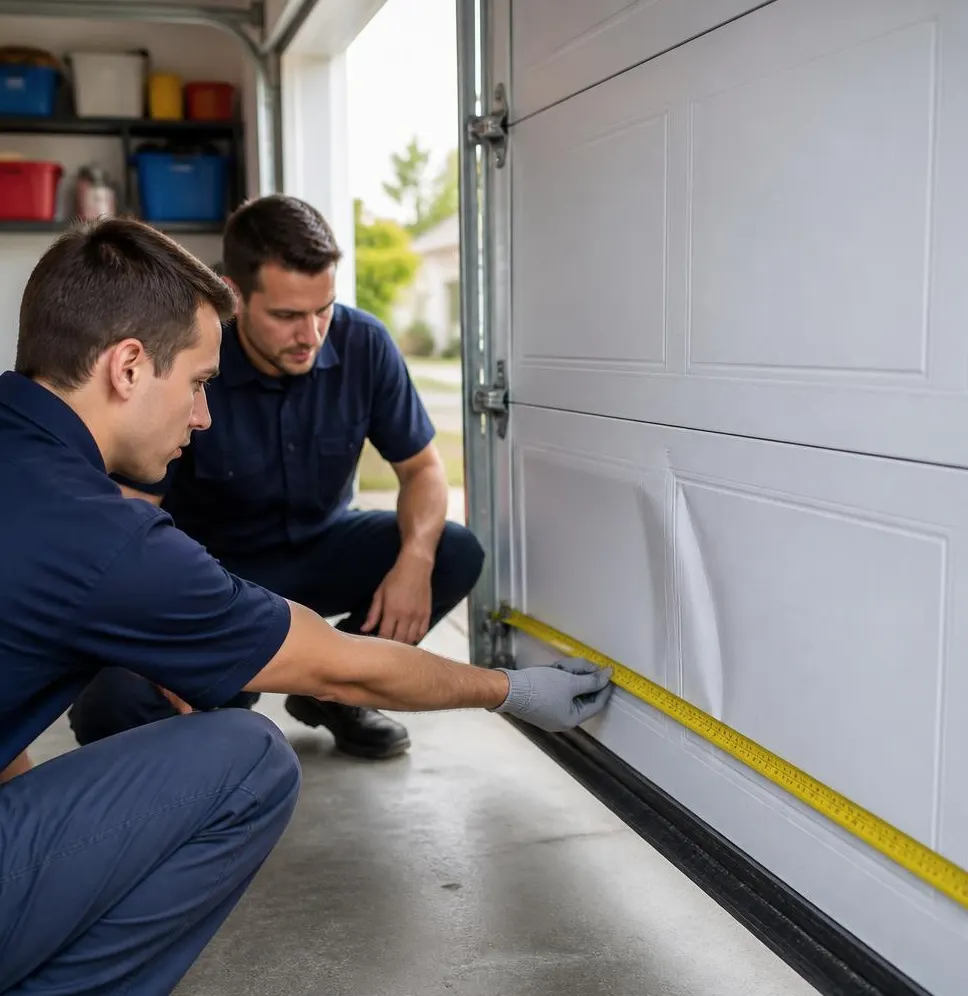
A bent or misaligned track makes the door travel crooked instead of straight up and down, and it almost always starts with either a physical impact or hardware that has worked loose over time. A light bend can sometimes be realigned on the spot. A sharper kink usually means replacing that section of track, because bent steel never holds its shape the second time you bend it back.
How to Tell Your Tracks Are the Problem
Tracks rarely fail quietly. Watch and listen for these signs:
- Scraping or grinding noise as the door moves, especially near one specific spot in the travel path
- Visible gap between a roller and the track, or a roller that looks like it's riding on the edge instead of inside the channel
- Door that shudders or jerks instead of sliding smoothly
- One side of the door looks higher than the other when it's partway open
- Rub marks or scraped paint on the door panels where they contact the track
- The door jumps the track entirely, which is a stop-and-call-someone situation, not a drive-it-till-it-breaks situation
If you catch any of this early, you're usually looking at a straightforward realignment. Wait too long and the rollers, cables, and opener gears start absorbing the extra stress too.
What a Technician Checks, in Order
1. Impact Damage
The first thing a tech looks for is a visible dent or kink, because that tells the story immediately. A car bumper tap, a bike or ladder leaned against the door, or a stray basketball can knock a track out of plumb in one hit. A sharp, localized bend like this almost never gets hammered back into shape reliably — the fix is cutting out and replacing that section of track rather than fighting with metal that's already fatigued.
2. Loose or Pulled Mounting Hardware
Next comes the hardware holding the track to the framing. Lag screws and brackets can work loose over years of door cycles, and in this climate that loosening happens faster. Humid air and afternoon downpours swell wood door jambs and framing, which lets anchor points shift slightly every season. Near the coast, salt air speeds up rust on steel fasteners and brackets, weakening their grip even when the wood itself is fine. The fix is straightforward: re-anchor into solid framing and swap corroded lag screws for galvanized or stainless hardware that holds up better against moisture.
3. Worn or Broken Rollers
A roller that's cracked, flat-spotted, or missing its bearing pulls unevenly on the track every time the door cycles. Over months, that uneven pull nudges the track out of alignment even if nothing ever hit it. Replacing worn rollers — nylon rollers are the quieter, longer-lasting upgrade from steel — stops this slow-motion damage before it needs a bigger repair.
4. Track Plumb and Level
With hardware and rollers checked, the tech measures whether each vertical track is plumb and whether the horizontal sections are level and parallel to each other. Small shifts here are common in older installations or after any framing movement, and they're usually correctable by loosening the mounting bolts, tapping the track back into position with a rubber mallet, confirming it with a level, and retightening to spec.
5. Cable and Spring Balance
A door that's out of balance — one side held under more spring or cable tension than the other — puts a steady sideways pull on the track every time it runs. This shows up as a track that keeps drifting out of alignment no matter how many times it's reset. The real fix is rebalancing the spring tension or replacing a stretched or frayed cable, not just realigning the track again and hoping it holds.
6. Foundation or Slab Movement
Rare, but worth ruling out last: if the slab under one side of the opening has settled or shifted, the track mounted to that framing will never sit level no matter what hardware you use. This is the one cause that may call for a broader conversation about the opening itself rather than a track repair.
What a Bent Track Does If You Leave It
A misaligned track doesn't just make noise — it forces the opener motor to work harder every cycle, wears rollers and bearings faster, stresses cables unevenly, and in the worst cases lets the door come off the track completely while it's moving. That's a safety issue, not just an inconvenience, especially with a heavy door moving at speed.
When to Call Precision Garage Door of Coral Gables
If your door is scraping, running crooked, or has already come off one side, that's a job for our Off Track Door Repair service. A technician will identify whether the track needs realignment or a section replacement, check the rollers and hardware at the same time, and confirm the spring tension is balanced before calling the job done — since a track that keeps drifting is often a balance problem in disguise. If it's been a while since anyone looked at the rollers, cables, or hardware, our Garage Door Maintenance & Tune-Up catches this kind of wear before it turns into a jammed or off-track door.
Call Precision Garage Door of Coral Gables for fast, reliable track repair and tune-ups anywhere in Coral Gables, FL.